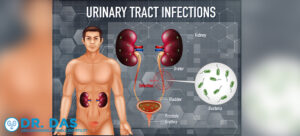
Pain or burning while passing urine is a symptom many people experience at least once in their lives. The two most common causes are kidney stones and urinary tract infection (UTI). Because both conditions affect the urinary system, patients often confuse them and delay proper treatment.
At Dr Das Clinic, one of the most frequent concerns patients have is identifying whether the pain is due to an infection or a stone. Although they may feel similar initially, the cause, severity, and treatment approach are completely different. Understanding the warning signs can help you seek timely medical care and avoid complications that may affect long-term kidney health.
Contents
- 1 Understanding the Basic Difference
- 2 How the Pain Feels Different
- 3 Changes in Urination
- 4 Fever and General Body Symptoms
- 5 Blood in Urine
- 6 Risk Factors: Who Is More Likely to Develop Them?
- 7 Diagnostic Tests: Why Self-Diagnosis Is Risky
- 8 Treatment Differences
- 9 When to Seek Immediate Medical Care
- 10 Prevention Tips
- 11 Final Thoughts
- 12 Frequently Asked Questions (FAQs)
- 12.1 1. Can a kidney stone cause a urinary tract infection?
- 12.2 2. Can a urinary tract infection lead to kidney stones?
- 12.3 3. How long does kidney stone pain usually last?
- 12.4 4. How quickly do UTI symptoms improve after starting antibiotics?
- 12.5 5. Can dehydration cause both kidney stones and UTIs?
- 12.6 6. Are kidney stones always visible on ultrasound?
- 12.7 7. Can men get urinary tract infections?
- 12.8 8. Is it safe to take over-the-counter painkillers before diagnosis?
- 12.9 9. Can these conditions recur?
Understanding the Basic Difference
A urinary tract infection (UTI) occurs when bacteria enter the urinary tract and multiply, most commonly in the bladder. The body reacts with inflammation, which leads to burning sensation, irritation, frequent urination, and sometimes fever.
A kidney stone, however, is not an infection. It is a solid crystal formed when minerals such as calcium, oxalate, or uric acid accumulate in concentrated urine. When these crystals grow large enough, they form stones. Problems begin when the stone moves within the kidney or enters the ureter (the tube connecting the kidney to the bladder), causing blockage and severe pain.
In simple terms:
- UTI is a bacterial infection
- A kidney stone is a mechanical blockage caused by mineral deposits
How the Pain Feels Different
Pain pattern is usually the most reliable clue.
Kidney Stone Pain
Kidney stone pain is sudden, sharp, and extremely intense. It typically begins in the side of the back just below the ribs and may radiate toward the lower abdomen or groin as the stone moves downward. The pain often comes in waves and can become unbearable. Patients are usually restless and unable to sit still. They keep changing positions, walking around, or bending forward, trying to find relief.
This condition is medically known as renal colic, and it is considered one of the most severe types of pain.
Urinary Infection Pain
UTI discomfort behaves differently. Instead of sharp waves, there is a continuous burning sensation while urinating. The pain remains mainly in the lower abdomen or bladder region. Patients often describe it as irritation or pressure rather than stabbing pain. Most people with UTI can sit comfortably, but feel discomfort every time they pass urine.
Key difference:
Kidney stone pain causes restlessness and severe flank pain, while UTI causes burning and bladder irritation.
Changes in Urination
Both conditions affect urination, but in distinct ways.
With Kidney Stones
- Frequent urge to urinate
- Passing only small amounts of urine
- Sudden interruption of urine flow
- Pain that worsens during urination
- Possible difficulty in passing urine if the blockage is severe
The urge is caused by obstruction and irritation of the urinary tract.
With Urinary Infection
- Strong and frequent urge to urinate
- Passing small quantities each time
- Cloudy urine
- Foul-smelling urine
- Burning sensation during urination
The urgency here is due to inflammation of the bladder lining, not blockage.
Fever and General Body Symptoms
Fever is one of the most useful distinguishing signs.
Kidney Stones
Uncomplicated kidney stones usually do not cause fever. Instead, patients may experience:
- Nausea
- Vomiting
- Sweating
- Severe discomfort
However, if fever develops along with stone pain, it may indicate that an infection has developed behind the blockage. This situation is dangerous and requires immediate medical attention.
Urinary Infection
UTIs commonly cause:
- Fever
- Chills
- Body ache
- Weakness
- Fatigue
If the infection spreads upward to the kidneys (a condition known as pyelonephritis), the fever becomes high and may be associated with back pain and severe illness.
Blood in Urine
Both conditions can cause blood in urine, but the appearance and reason differ.
In Kidney Stones
The stone scratches the inner lining of the urinary tract, causing visible pink, red, or brown-colored urine. Sometimes blood may be microscopic and detected only through lab tests.
In Urinary Infection
Inflammation and irritation may cause slight bleeding and pus formation. Urine often appears cloudy with a strong odor rather than clearly red.
Risk Factors: Who Is More Likely to Develop Them?
Understanding risk factors can also help differentiate the cause.
Risk Factors for Kidney Stones
- Low water intake
- High salt consumption
- High-protein diet
- Family history of stones
- Obesity
- Certain metabolic disorders
People living in hot climates are also at higher risk because dehydration concentrates the urine.
Risk Factors for UTI
- Poor hydration
- Holding urine for long periods
- Poor genital hygiene
- Diabetes
- Pregnancy
- Weakened immunity
Women are generally more prone to UTIs due to anatomical reasons.
Diagnostic Tests: Why Self-Diagnosis Is Risky
Because symptoms overlap, guessing the condition can delay proper treatment. Taking antibiotics for a kidney stone will not relieve pain. Ignoring infection can allow bacteria to spread and damage the kidneys. Consulting the best urologist at the right time ensures accurate diagnosis and prevents unnecessary complications.
At Dr Das Clinic, doctors perform appropriate investigations to confirm the diagnosis:
- Ultrasound scan to detect stones
- CT scan for detailed stone evaluation
- Urine routine examination
- Urine culture to identify bacterial infection
- Blood tests if needed
Accurate diagnosis ensures correct treatment and prevents complications.
Treatment Differences
The treatment approach depends entirely on the cause.
Kidney Stone Treatment
Small stones (usually less than 5 mm) may pass naturally with:
- Increased water intake
- Pain relief medications
- Medicines that relax the urinary tract
Larger stones may require:
- Laser fragmentation (lithotripsy)
- Endoscopic stone removal
- Minimally invasive surgical procedures
Antibiotics are prescribed only if an infection is present.
Urinary Infection Treatment
UTI requires:
- Appropriate antibiotics based on the urine culture
- Increased fluid intake
- Urinary alkalizers to reduce burning sensation
- Pain relievers, if necessary
Most uncomplicated UTIs improve within a few days when treated early.
When to Seek Immediate Medical Care
You should consult a doctor urgently if you experience:
- Severe side or back pain
- Fever with urinary symptoms
- Persistent vomiting
- Visible blood in urine
- Difficulty passing urine
- Reduced urine output
These may indicate obstruction, spreading infection, or kidney involvement and should never be ignored.
Prevention Tips
To Prevent Kidney Stones
- Drink at least 2–3 liters of water daily
- Reduce excessive salt intake
- Avoid excessive consumption of processed foods
- Maintain a balanced diet
- Follow medical advice if you have a history of stones
To Prevent Urinary Infections
- Drink adequate fluids
- Maintain proper hygiene
- Do not delay urination
- Control blood sugar if diabetic
- Seek early treatment for urinary symptoms
Final Thoughts
Kidney stones and urinary infections affect the same urinary system, but are very different conditions. Severe, moving pain without fever usually suggests a kidney stone. Burning urination with fever and body weakness more commonly indicates infection. However, overlapping symptoms can occur, making professional evaluation essential.
At Dr Das Clinic, early diagnosis, proper investigations, and personalized treatment plans help patients recover quickly and protect long-term kidney function. If you notice unusual urinary symptoms, do not delay consultation. Prompt medical care not only relieves pain but also prevents serious complications that may affect your kidney health in the future.
Frequently Asked Questions (FAQs)
1. Can a kidney stone cause a urinary tract infection?
Yes. A kidney stone can block urine flow, creating an environment where bacteria can grow. This may lead to a secondary urinary infection. When both occur together, it becomes a medical emergency and needs immediate treatment.
2. Can a urinary tract infection lead to kidney stones?
Repeated or untreated urinary infections can sometimes contribute to a specific type of stone called a struvite stone. These stones form due to chronic bacterial infections in the urinary tract.
3. How long does kidney stone pain usually last?
Kidney stone pain may last for a few hours to several days, depending on the size and movement of the stone. Pain typically comes in waves and may reduce once the stone passes or is removed.
4. How quickly do UTI symptoms improve after starting antibiotics?
Most uncomplicated UTIs begin to improve within 24 to 48 hours after starting the correct antibiotic. However, it is important to complete the full course of medication even if symptoms disappear early.
5. Can dehydration cause both kidney stones and UTIs?
Yes. Inadequate water intake concentrates urine, increasing the risk of mineral crystal formation (stones) and bacterial growth (infection). Staying well-hydrated significantly lowers the risk of both conditions.
6. Are kidney stones always visible on ultrasound?
Small stones or stones located in certain areas may not always be clearly visible on ultrasound. In such cases, a CT scan provides more accurate detection.
7. Can men get urinary tract infections?
Yes. Although UTIs are more common in women, men can also develop urinary infections, especially if they have prostate enlargement, diabetes, or weakened immunity.
8. Is it safe to take over-the-counter painkillers before diagnosis?
Temporary pain relief may help, but relying only on painkillers without proper diagnosis can delay treatment. Severe pain or fever should always be medically evaluated.
9. Can these conditions recur?
Yes. Both kidney stones and UTIs can recur, especially if underlying risk factors such as dehydration, dietary habits, diabetes, or structural urinary problems are not addressed.